

Dropped Tools
Hammers, drills, fasteners, power tools, and hand tools can fall from ladders, scaffolds, roofs, and upper floors.
A dropped tool, unsecured material, hoisted load, scaffold component, or piece of construction debris can cause catastrophic injuries in seconds.
Berkowitz & Weitz Law represents workers, pedestrians, and families affected by falling-object accidents throughout New York. Our attorneys investigate how the object was stored, secured, hoisted, moved, or allowed to fall and identify the parties that may be responsible.
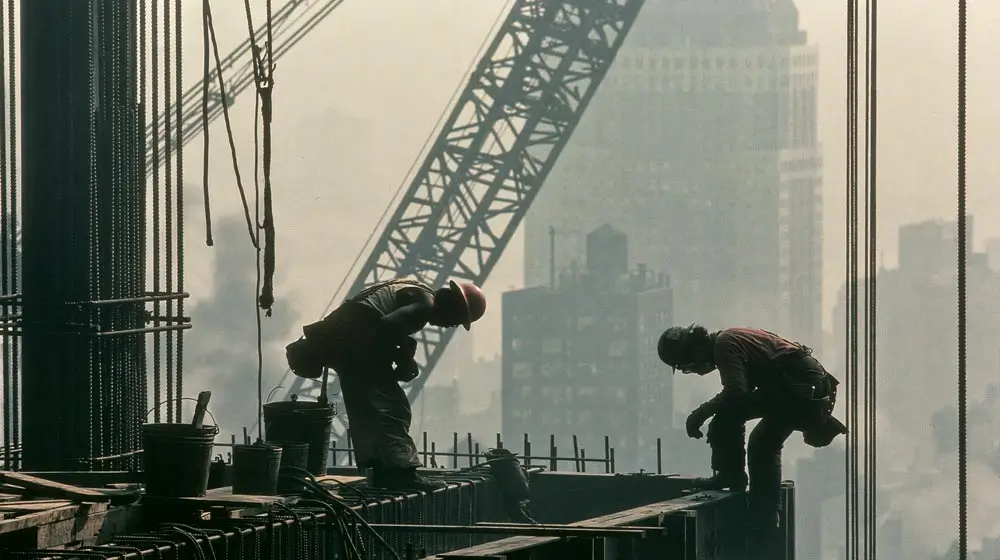
Construction materials, tools, machinery, rigging components, and debris can fall from scaffolds, cranes, rooftops, upper floors, platforms, and open shafts.
These cases often involve more than one company and may require review of lift plans, securing methods, tool-tether policies, scaffold protection, storage practices, work sequencing, and site supervision.
Falling-object claims are broader than crane accidents and may involve nearly any item that was stored, carried, hoisted, used, or left unsecured above workers or pedestrians.
Hammers, drills, fasteners, power tools, and hand tools can fall from ladders, scaffolds, roofs, and upper floors.
Lumber, steel, concrete, bricks, glass, piping, drywall, and façade materials may fall when improperly stored or secured.
Suspended materials may fall because of rigging failures, improper attachment, defective equipment, or unsafe lift planning.
Planks, braces, guardrails, fasteners, debris, and equipment can fall from unstable or poorly maintained scaffolds.
Materials and tools may pass through unprotected floor openings, shafts, stairwells, or gaps in work platforms.
Hooks, slings, shackles, boom components, counterweights, and suspended loads may cause catastrophic struck-by injuries.
New York construction claims may involve overlapping statutes. The laws that apply depend on the work being performed, the object involved, the safety devices available, and why the object fell.
Labor Law §240 may apply to certain falling-object accidents when an object required securing for the work and an appropriate safety device was absent, inadequate, improperly placed, or failed. The law does not apply automatically every time an object falls.
Labor Law §241(6) may apply when a specific and applicable Industrial Code regulation was violated and contributed to a construction, demolition, or excavation accident.
For a broader overview of construction claims, visit our New York construction accident lawyer page.

An injured worker’s direct employer is generally protected from an ordinary personal injury lawsuit by workers’ compensation exclusivity, subject to limited exceptions. Claims may still be available against qualifying third parties.
Owners may have duties under New York Labor Law depending on the project and accident.
General contractors may be responsible for coordination, sequencing, site safety, and statutory duties.
A construction manager may qualify as a statutory agent or bear responsibility for unsafe project conditions.
A subcontractor may have created the hazard, failed to secure materials, or controlled the work that caused the object to fall.
Unsafe lifts, defective rigging, improper load control, or poor communication may create liability.
Defective hooks, slings, hoists, fasteners, containers, or other products may contribute to the accident.
Even a relatively small object can cause devastating injuries when it falls from a significant height.
Head trauma may affect memory, cognition, speech, behavior, mobility, and employment.
Damage to the spinal cord can cause paralysis, chronic pain, and long-term care needs.
Falling materials can cause complex fractures, vision loss, nerve damage, and disfigurement.
Heavy objects may damage muscles, nerves, blood vessels, internal organs, and limbs.
Struck-by trauma may cause herniated discs, fractures, nerve injury, and chronic pain.
Severe crush trauma may require surgical amputation or cause traumatic limb loss.
Internal bleeding and organ damage may require emergency surgery and intensive care.
Families may have legal options after a fatal falling-object or construction accident.
Prompt preservation can be critical because the object may be removed, discarded, repaired, or returned to service shortly after the accident.
Images of the object, location, elevation, storage area, scaffold, crane, opening, and surrounding conditions.
Accident reports, coworker statements, supervisor notes, emergency records, and available surveillance video.
Lift plans, load charts, sling inspections, hook records, signal-person information, and rigging documentation.
Tool-tether rules, debris-control procedures, storage plans, housekeeping records, and protective-canopy requirements.
Project contracts, safety plans, daily logs, inspection records, training materials, and OSHA-related documents.
Medical records, bills, disability documentation, payroll records, union benefits, and evidence of future losses.
A successful third-party claim may provide compensation for losses that workers’ compensation does not fully cover.
Emergency care, hospitalization, surgery, rehabilitation, medication, and future treatment.
Past wages, employment benefits, reduced earning capacity, and future income loss.
Physical pain, emotional harm, disability, and loss of enjoyment of life.
Therapy, home care, medical equipment, modifications, and long-term assistance.
Compensation for lasting impairment and its effect on work and independence.
Potential recovery for financial losses and other damages available to eligible family members.
We examine how the object fell, the work underway, and urgent deadlines.
We seek the object, photographs, video, reports, records, and witness information.
We evaluate each company’s role, contracts, safety duties, and potential responsibility.
We document treatment, wage loss, future needs, disability, and life impact.
We pursue a fair result and prepare to litigate when necessary.
The object may be removed, discarded, repaired, or returned to service. Video can be overwritten and witnesses may leave the project. Early legal action can help preserve what is needed to prove the claim.
Overview of claims involving unsafe jobsites, contractors, equipment, and Labor Law violations.
Claims involving crane collapses, dropped loads, rigging failures, unsafe lifts, and equipment defects.
Representation for workers injured by unstable scaffolds, missing protection, or falling scaffold materials.
Claims involving ladders, roofs, platforms, openings, scaffolds, and elevated work areas.
Learn when elevation-related protections may apply to falling-object and gravity-related accidents.
Learn how specific Industrial Code violations may support a construction accident claim.
Potentially responsible parties may include property owners, general contractors, construction managers, subcontractors, crane and rigging companies, equipment providers, and manufacturers. Responsibility depends on the work, the object, the project relationships, and why the object fell.
No. Labor Law §240 may apply to certain falling-object accidents when the object required securing for the work and an appropriate safety device was absent, inadequate, improperly placed, or failed. The facts and accident mechanism matter.
Potentially. Workers’ compensation may provide benefits through the employer, while a separate third-party claim may be available against an owner, contractor, equipment company, or another responsible entity.
Seek medical care, report the accident, photograph the object and scene when possible, identify witnesses, preserve documents, avoid guessing in recorded statements, and speak with an attorney promptly.
Many New York personal injury claims are subject to a three-year limitation period, but shorter deadlines may apply when a municipality, public authority, or other government-related entity is involved. Workers’ compensation and insurance claims have separate deadlines.
There is no fixed formula. Value depends on liability, the severity and permanence of the injuries, medical costs, lost income, future care, insurance coverage, and the effect of the accident on the injured person’s life.
Contact Berkowitz & Weitz Law to discuss what happened, the parties that may be responsible, and the steps needed to protect your claim.